Discover the untold stories of waterborne diseases that shaped the 19th century. Explore a world where contaminated water claimed lives, while communities struggled to understand the invisible threats. This site combines historical research with AI-generated imagery to bring the past to life, highlighting the impact of diseases like cholera, and typhoid.

The History of Waterborne Diseases
Early Awareness
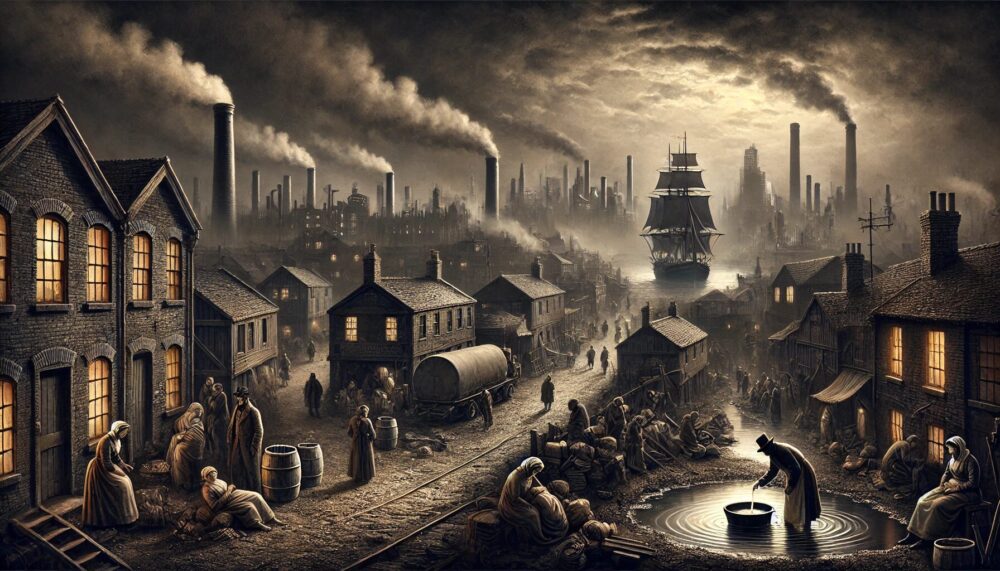
The connection between contaminated water and disease was not fully understood in the 19th century, but its devastating effects were unmistakable. Communities reliant on rivers, wells, and public fountains often fell victim to outbreaks. Urbanization and population growth worsened sanitation, turning water sources into breeding grounds for cholera, and typhoid fever. Despite limited knowledge of germs, early physicians observed correlations between unclean water and illness, noting patterns in the spread of disease.
The Role of Contaminated Water
By the late 18th century, it became clear that cities with centralized water systems were at higher risk of waterborne disease outbreaks. Rivers polluted with human waste and industrial runoff served as the main drinking water source for many. Without effective sewer systems, public health suffered greatly. London, Paris, and other major European cities reported unprecedented mortality rates linked to typhoid, and cholera.
Early Efforts in Sanitation
Despite limited scientific understanding, efforts to improve sanitation began taking shape. In Paris, laws were enacted to cover wells and remove waste from streets. In London, early sewer systems were introduced in affluent areas. However, these measures were often poorly implemented or abandoned due to cost. Physicians, scholars, and engineers began advocating for clean water supplies, laying the groundwork for the public health reforms of the 19th century.
A Lasting Legacy
The waterborne diseases of the 19th century were a driving force behind modern sanitation and public health initiatives. From the cholera pandemics that revealed the importance of clean water to the studies of typhoid fever that advanced epidemiology, these historical crises underscored the critical need for hygiene and infrastructure. Today, they remind us of the ongoing challenge to ensure safe water access worldwide.